
Hoarding in our neighborhood?
Updated: Jun 5

Ever see those news stories about people hoarding animals and get so mad, and hope they “get what they deserve?”
My neighbor and I tried to help a dog once, deemed aggressive. (Full story here.) A man in the community with a great reputation came to the rescue, telling us that he boarded dogs that appeared aggressive and he'd work with his behavioral issues. I believed him. He had a good reputation, lots of property, everyone seemed to know that he cared – but then dogs were found emaciated with food donations just a few feet away. More dogs suffered then anyone knew, or told. He just completely checked out.
But who does that? Who goes through alllll the trouble to get aggressive dogs off the kill list, bring them to his home to care for them as he collects donations? Sparingly, I do believe. But are people that evil they’d go to those lengths... maybe playing into our generosity?
I didn’t want to believe so.
But we hear these stories of people "rescuing" animals because they don’t want them to die at County. Or they think they can house them, and can for a little while, but things can change over 16 years time.
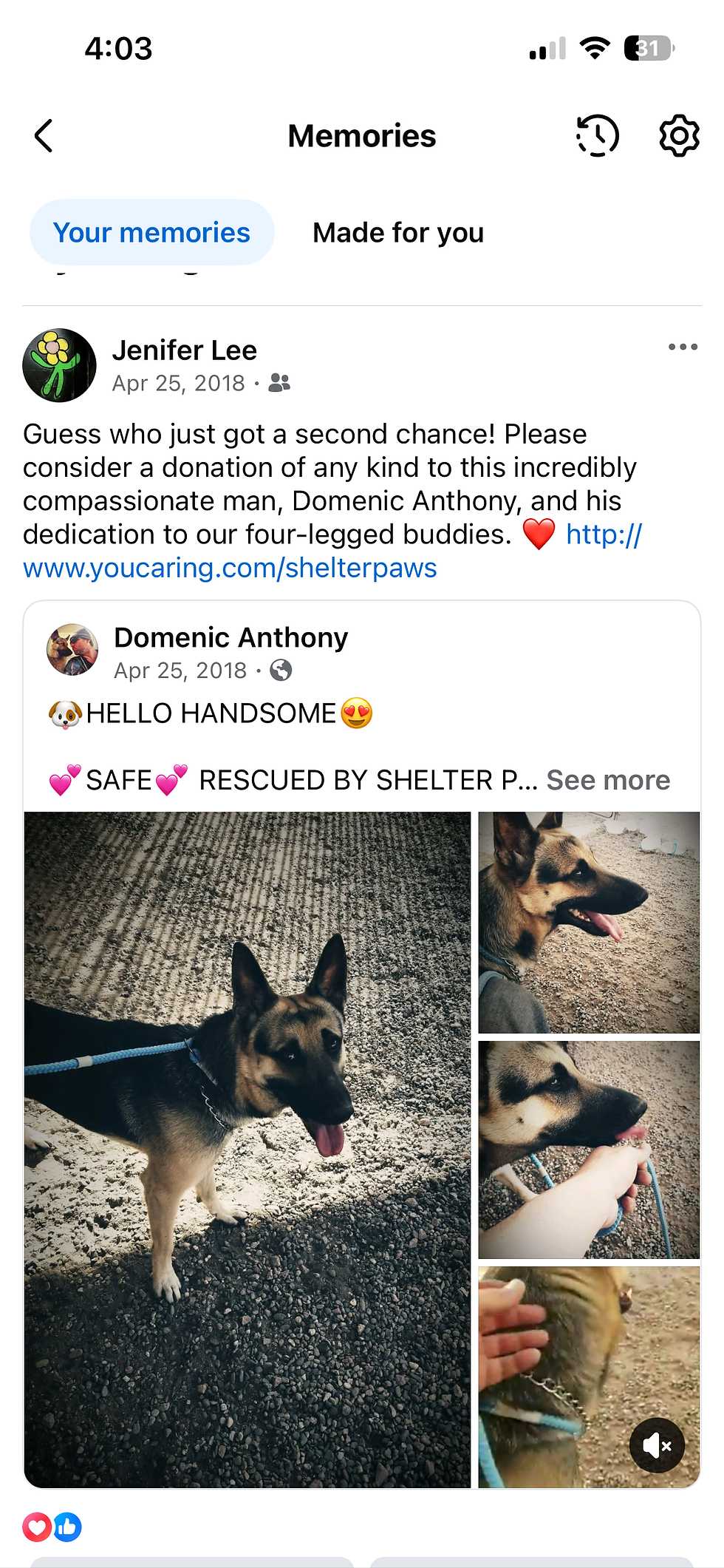
So what do they deserve?
Mental health help. Someone to tell them they can’t do it all, someone to tell them 'No more.' 'Manage intake.' Easier said.
I hear it when I was volunteering, “Oh I would take them all home.” I just feel at some point the reasonable mind says, this is all I can do.
Which lead me down the rabbit hole to research.
How do we notice it in our neighborhood?
We ask the experts on the internet and compiled the ones that made the most sense, but please feel free to share other things to look for:
Someone who continually takes in more animals
Frequent posts about urgent intakes but no mention of adoption or placement
A lot of animals, but none seen leaving the property
The person becomes more withdrawn from neighbors, friends, or rescue networks
Hesitation or refusal to allow anyone inside the home
Defensive responses when asked about the animals
Strong odors (ammonia, waste) coming from the home
Visible neglect of the property
Accumulation of clutter
Seeing underweight, sick, or injured animals
Never assume!
Animal hoarding is not always intentional cruelty
Many individuals genuinely believe they are helping
Confrontation or shaming can actually make the situation worse
And of course, what they recommend:
If something feels off, the goal isn’t to diagnose—it’s to create a pathway to help:
Contact local animal control or humane societies for a welfare check
Reach out to rescue organizations that may already be aware of the situation
Document concerns (dates, observations) rather than relying on assumptions
When possible, approach with concern—not accusation
I sure missed the signs in this particular case, but actually noticed red flags again just a few years ago with another rescue that ended up getting shut down for the care of the animals. I understand its very easy to take in one more, especially when people are begging you hourly. Another symptom of the pet crisis.
We welcome contributors/therapists that can answer more questions for readers. This is a website to share information that helps inform, educate, advocate, collaborate to get us out of this pet crisis, but also get us through it!

Do you have something you'd like to submit that will help inform, inspire, or move someone toward helping end the pet crisis? Please email: Info@therescuedogproject.com
Your voice can help shift perspectives, encourage people to adopt successfully, volunteer confidently, advocate freely, inform rationally, and collaborate openly to help end the pet crisis in our own communities.


Comments